
Old logic boards mismatch guides
Those units use mechanical logic boards and limit switches that don't always play nice with the plug-and-go troubleshooting you'll find online, which is written for newer belt-drive units with smart boards.
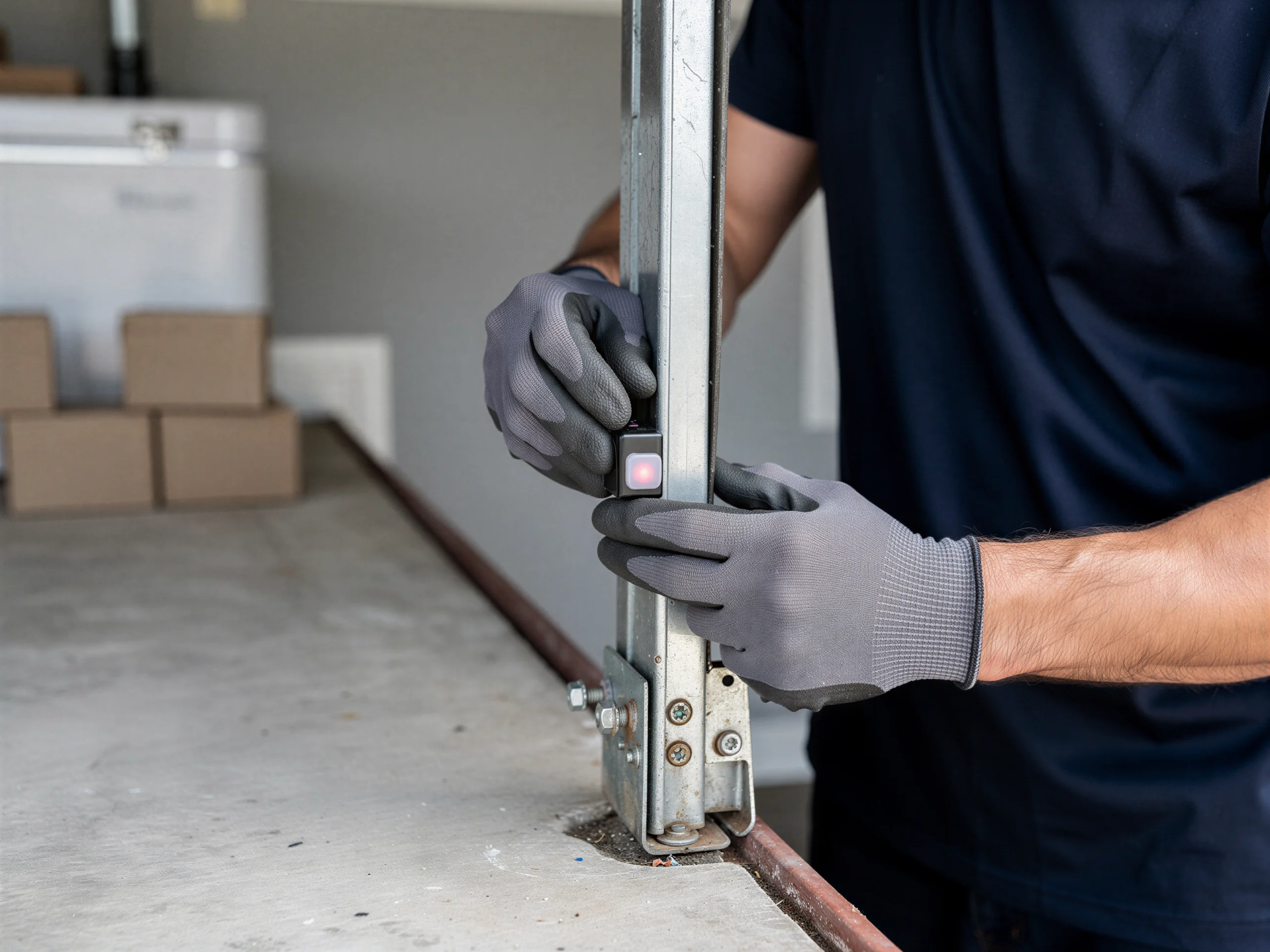
Green Valley, Rapid City
Green Valley's houses date to about 1989, and the openers inside them show it: worn gears, failing logic boards. We repair them, driving 6 miles from Rapid City.
DIY or pro
If your opener is acting up in Green Valley, the age of the house tells you a lot before you even open the garage. Most homes out here went up around 1989, which means the opener bolted to your ceiling is either the original chain-drive unit or a direct swap-in replacement from roughly the same era.
Those units use mechanical logic boards and limit switches that don't always play nice with the plug-and-go troubleshooting you'll find online, which is written for newer belt-drive units with smart boards.
You can safely check a few things yourself: make sure the unit is plugged in, check if the wall switch lights up, and look at the photo-eye sensors near the floor for anything blocking them or knocked out of alignment. Past that, opening the housing on a motor built in the late 80s or 90s means dealing with grease-packed gears and a capacitor that can still hold a charge.
We're about 6 miles out from our shop in Rapid City, so if the fix is a five-minute sensor realignment, it's worth trying before you call. If it's the gear kit or the board, that's a job for a truck, not a screwdriver.
Watch-outs
The openers common to Green Valley's housing stock fail in predictable ways once they pass the 25 to 35 year mark. The nylon drive gear that moves the chain or screw wears down and starts stripping teeth, usually with a grinding sound before it quits outright.
The capacitor that gives the motor its initial torque weakens, so the door starts to open then stalls halfway. Circuit boards from this era weren't built to handle decades of humidity and temperature swings, and in a cold-climate area like this one, that swing is severe - boards crack at the solder points after enough freeze-thaw cycles.
Photo-eye safety sensors, if they were ever added to an older unit, are often wired with cheap low-voltage cable that corrodes at the connection points. Limit switches drift out of adjustment, which is why a door that used to stop clean now either slams the floor or stops a foot short.
None of this is a Green Valley-specific defect - it's just what 30-plus-year-old hardware does. The honest limitation here: once a logic board is dead on a unit this old, we usually can't source an exact replacement board. At that point a new opener costs less than hunting for discontinued parts.
Warning signs
On a 1989-era opener, trouble rarely arrives all at once. It starts small: the door hesitates before it moves, or the motor hums for a second without the chain engaging.
You might notice the remote working from the driveway but not from across the yard, which points to a weak receiver board rather than the remote itself. A door that reverses right after touching the floor is often a limit switch out of adjustment, not a safety sensor problem, even though people assume the latter first.
In winter, cold-soaked grease in the gearbox thickens up overnight, so the first open of the day grinds or stalls while a midday open runs fine - that's a sign the gear kit is near the end, not a one-time glitch.
A door that opens on wall switch but not on remote usually means a dying antenna wire inside the housing. And if the light on the opener head flashes a set number of times before doing nothing, that's the unit itself telling you a fault code - worth noting the flash count before you call, since it narrows down the part.
Job timing
Most opener calls in Green Valley start with the same look: pull the housing cover, check the capacitor, check the gear, check the board. On units from the late 80s through the 90s, the gear kit and capacitor are common, inexpensive fixes we carry on the truck. A dead logic board is a longer conversation, since exact replacements for motors this old often aren't made anymore - we'll tell you straight if a universal board will work or if the unit's done.
We're not a Green Valley-based shop; we run out of Rapid City, about 6 miles away, so we build the drive into the appointment rather than pretending we're already on your block. That doesn't change the work once we're there. With roughly 465 households in Green Valley and a housing stock that's mostly the same age, a decent share of the openers we see out this way are on borrowed time - fixable today, but worth budgeting for a replacement in the next few years rather than being surprised by it.
Questions
Depends what's broken. A gear kit or capacitor swap on a 1980s or 90s opener is a solid repair and usually cheaper than replacing the unit. A dead logic board on a unit that old is a different call - exact boards are often unavailable, and a universal fix can cost close to a new opener, so we'll tell you which side of that line you're on.
No. We run out of Rapid City, about 6 miles from Green Valley, and we drive out for opener calls. There's no local branch or drop-off counter here, just a truck that comes to you.
Cold thickens the grease packed into the gearbox on older units, so the first open of a cold morning can grind or stall even when the unit runs fine by afternoon. That's a sign the gear kit is wearing out, not a one-time weather fluke, especially on openers installed when most Green Valley homes were built.
Usually the opener. A weak signal range points to a tired receiver board or antenna wire inside the motor housing, common on units that have been running since the late 80s or 90s. Swapping batteries or buying a new remote rarely fixes it.
Explore more
Ready when you are
Rapid City Garage Door Pros repairs and installs garage doors, springs and openers in Rapid City, SD and the surrounding area.